
You have no items in your shopping cart.


Anti-Malaria
Anti-malaria treatments
NationWide Pharmacies online doctor service provides offers on a full range of anti-malaria treatments for all regions
Make sure you are protected if you are travelling to a malaria risk country. NationWide Pharmacies provide a range of anti-malarial treatments to ensure you are properly protected.
We strongly recommend you take a look at the NHS fit for travel and Travel Health Pro websites for up to date information about the country you are travelling to information which provides Malaria advice depending on where you are travelling to.
Our free consultation service is discreet and confidential and can be done from the comfort of your own home. All consultations are reviewed by our GMC registered doctor and treatments are delivered direct to your door. Travel safe and protect yourself against malaria by using our free online consultation service today.
Start your online consultation now
Anti-Malaria treatments:
NationWide Pharmacies provides private prescriptions for Malarone (Atovaquone Proguanil), Lariam (Mefloquine) and Doxycycline.
IMPORTANT: If you need to order malaria tablets for other family members you must order them seperately with an account in their name (with the exception of a child) in order for our doctor to be able to review the prescription request.
| Malarone (Atovaquone Proguanil) | |
|---|---|
Malarone (Atovaquone Proguanil) is a fixed-dose anti-malarial with an active ingredient combination of atovaquone and proguanil hydrochloride, antimalarial agents, in tablet formulation. Malarone is a popular alternative to other anti-malaria brands due to it’s high level of protection. Dose: 1 Tablet daily Start Treatment: 2 Days before entering a malaria zone Stop Treatment: 1 Week after leaving a malaria zone |
|
Manufactured by  |
|
| Lariam (Mefloquine) | |
|---|---|
Lariam (Mefloquine) is an effective anti-malarial used in both the prevention and treatment of malaria in areas where there is a high risk of infection. Lariam uses the active ingredient Mefloquine hydrochloride and works by attacking the parasite that causes malaria. Dose: 1 Tablet weekly Start Treatment: 2 Weeks before entering a malaria zone Stop Treatment: 4 Weeks after leaving a malaria zone |
|
Manufactured by  |
|
| Doxycycline | |
|---|---|
Doxycycline is a tetracycline antibiotic. It fights bacteria in the body and can be used as a prophylaxis of malaria by taking one 100mg tablet daily, two days before entering a malaria area, during your trip and for four weeks afterwards. Dose: 1 Tablet daily Start Treatment: 2 Days before entering a malaria zone Stop Treatment: 4 Weeks after leaving a malaria zone |
|
Manufactured by  |
|
| Malarone Paediatric (Atovaquone Proguanil) | |
|---|---|
Malarone Peadiatric tablets are used for the prevention of malaria in children and teenagers who weigh between 5kg and 40kg. The treatment should be started 2 days before traveling and for 7 days upon returning. The usual dose to prevent malaria will depend on your child’s weight (see product details for dosage information). IMPORTANT: If you need to order malarone paediatric tablets for family members you must order them seperately with an account in their name in order for our doctor to be able to approve the prescription request. Dose: 1 Tablet daily Start Treatment: 2 Days before entering a malaria zone Stop Treatment: 1 Week after leaving a malaria zone |
|
| Manufactured by |
|
Anti-malaria treatment comparison:
The table below compares the different anti-malaria treatments, the recommended dose, and how long the treatments should be taken for to give effective protection. If you are unsure of which treatment you should use or you feel you need further information you can speak with one of our trained pharmacists.
| Treatment Comparison | |||
|---|---|---|---|
| Malarone | Lariam | Doxycycline | |
| Active Ingredient | Atovaquone Proguanil 250mg/100mg | Mefloquine 250mg | Doxycycline 100mg |
| Dose | 1 Tablet daily | 1 Tablet weekly | 1 Tablet daily |
| Start treatment | 2 Days before departure | 2-3 Weeks before departure | 2 Days before departure |
| Finish treatment | 1 Week after returning | 4 Weeks after returning | 4 Weeks after returning |
What is Malaria?
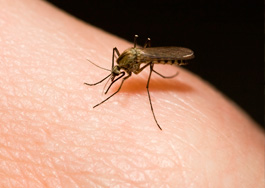
Malaria is a disease caused by the presence of the Plasmodium parasite in the blood. Mostly found in tropical climates the parasite is transmitted between humans by mosquito bites. The parasite develops in the liver before re-entering the bloodstream where it attacks the red blood cells causing them to burst which causes severe fever in the human carrier.
Malaria symptoms:
When travelling in high risk areas it is important to know the what the key symptoms of malaria are. If you are in a malaria risk region and develop these symptoms you should seek medical assistance urgently. Left untreated malaria can have serious long term complications and can be fatal in some cases.
- High temperature or fever of 38C (100.4F) or above
- Vomiting
- Sweats and chills
- Muscle pains
- Severe Headaches
- Diarrhoea
According to the Health Protection Agency (HPA) in 2011 there were 1677 reported cases of malaria, including 8 deaths, caused by travel and holidays in malaria risk countries.
High risk malaria regions:
Malaria is predominantly found in tropical regions. You may require anti-malarial tablets if you are travelling to sub-Saharan Africa, Central and South America, Asia, parts of the Middle East, some Pacific Islands (Papua New Guinea) and some areas of the Caribbean (Haiti & Dominican Republic).
Africa:
Angola, Benin, Botswana, Burkina Faso, Burundi, Cameroon, Central African Republic, Chad, Congo, Cote dIvoire, Democratic Republic of Congo (Zare), Djibouti, Equatorial Guinea, Eritrea, Ethiopia, Gabon, Gambia, Ghana, Guinea, Guinea-Bissau, Kenya, Liberia, Madagascar, Malawi, Mali, Mauritania, Mozambique, Namibia, Niger, Nigeria, Rwanda, Senegal, Sierra Leone, Somalia, South Africa, Sudan, Swaziland, Tanzania, Togo, Uganda, Zaire, Zambia, Zimbabwe.
Middle East:
Iran, Saudi Arabia.
Asia & Pacific Islands:
Afghanistan, Azerbaïjan, Bangladesh, Buhtan, Burma (Myanmar), China (including Taiwan and Tibet), India, Indonesia, Laos, Myanmar (Burma), Nepal, Pakistan, Papua New Guinea, Peru, Philippines, Sao Tomé and Principe, Solomon Islands, Sri Lanka, Tajikistan, Turkey, Timor Leste (Oriental Timor), Vanuatu, Vietnam, Yemen.
Central &South America:
Brazil, Belize, Bolivia, Colombia, Costa Rica, Ecuador, Dominican Republic, French Guyana, Guatemala, Guyana, Haiti, Honduras, Mexico, Nicaragua, Panama, Paraguay, Suriname, Venezuela.
How to prevent malaria:
If you are travelling to a malaria risk area you should always remember to go through the simple 'ABCD check' as follows:
- Awareness of risk. Do you have any conditions that may increase the risk of you catching malaria.
- Bite prevention. Avoid mosquito bites by using insect repellent, covering your arms and legs and using a mosquito net.
- Check whether you need anti-malarial tablets. You can check the information on this site to see if you should be taking malaria tablets. You can also use our quick malaria tablet search to see which tablets you need for your destination.
- Diagnosis. By knowing the symptoms of malaria (see above) you will know what signs to look out for and seek appropriate medical help. Remember that malaria can stay dormant for up to a year after you return from a malaria risk zone.
Video: Preventing Malaria
Play the video for an expert description on how malaria attacks different areas of the body, and what you can do to avoid getting infected.
Further information on Malaria and other tropical diseases is available from Fit For Travel (www.fitfortravel.nhs.uk)

 TRUST
TRUST